
The Moment She Put Down the Eraser
She put down the eraser.
In a game co-creation workshop, Xiawen watched a fourth-grade girl draw, erase, and start over again. Every line had to be perfect. Every mistake seemed to carry shame.
Xiawen did not rush her. Instead, she turned to the class and said:
“It’s okay to make mistakes. Mistakes can be beautiful too, right?”
Something shifted.
The girl did not only put down the eraser in her hand. She put down, for a moment, the fear of being wrong.
Months later, she came to Xiawen’s office and said:
“Teacher, I suddenly understand. Not pursuing perfection is actually the right way. I will never feel ashamed of making a mistake again.”
For Xiawen, that was the kind of moment education is made of — a single sentence, a single game, a single space where a child is allowed to be imperfect.
The Question She Carried
Xiawen used to live a very different life.
She was once on a management track at a Fortune 500 company, with a respectable salary and a clear career path. In 2022, she resigned. Today, she teaches in a primary school in the mountain villages of Meizhou, Guangdong — music, mathematics, and English for third and fourth graders.
From corporate life to rural teaching, it looked like a dramatic transition.
But for Xiawen, the real question was deeper:
“What should a meaningful life look like?”
In the corporate world, many answers already seemed designed: processes, KPIs, reporting lines, and standard solutions. Education was different. Education meant opening a door and watching children walk through it, without knowing exactly where they would go.
After arriving in the mountains, Xiawen slowly realized that meaning did not live in one grand decision. It lived in daily moments — in a child’s sentence, a sudden question, the light returning to someone’s eyes.
“Here, I’m not only a teacher,” she says. “I am also a student being healed by children’s purity and resilience.”
Finding SDG Hero
Before coming to Meizhou, Xiawen was already a game lover. She wrote game reviews online and enjoyed thinking about game design.
So when her two identities met — rural teacher and game enthusiast — one question naturally appeared:
What if these two could come together?
She began searching and eventually found SDG Hero.
When she received the toolkit in 2024, she felt that education did not have to happen only from the front of a classroom. It could happen inside the worlds children created themselves.
But becoming a Game Master and becoming a good facilitator were not the same thing.
At first, she tried to fit game co-creation into study periods, music classes, and spare afternoons. The children were interested, but one problem appeared quickly:
They were afraid of mistakes.
When Mistakes Became Beautiful
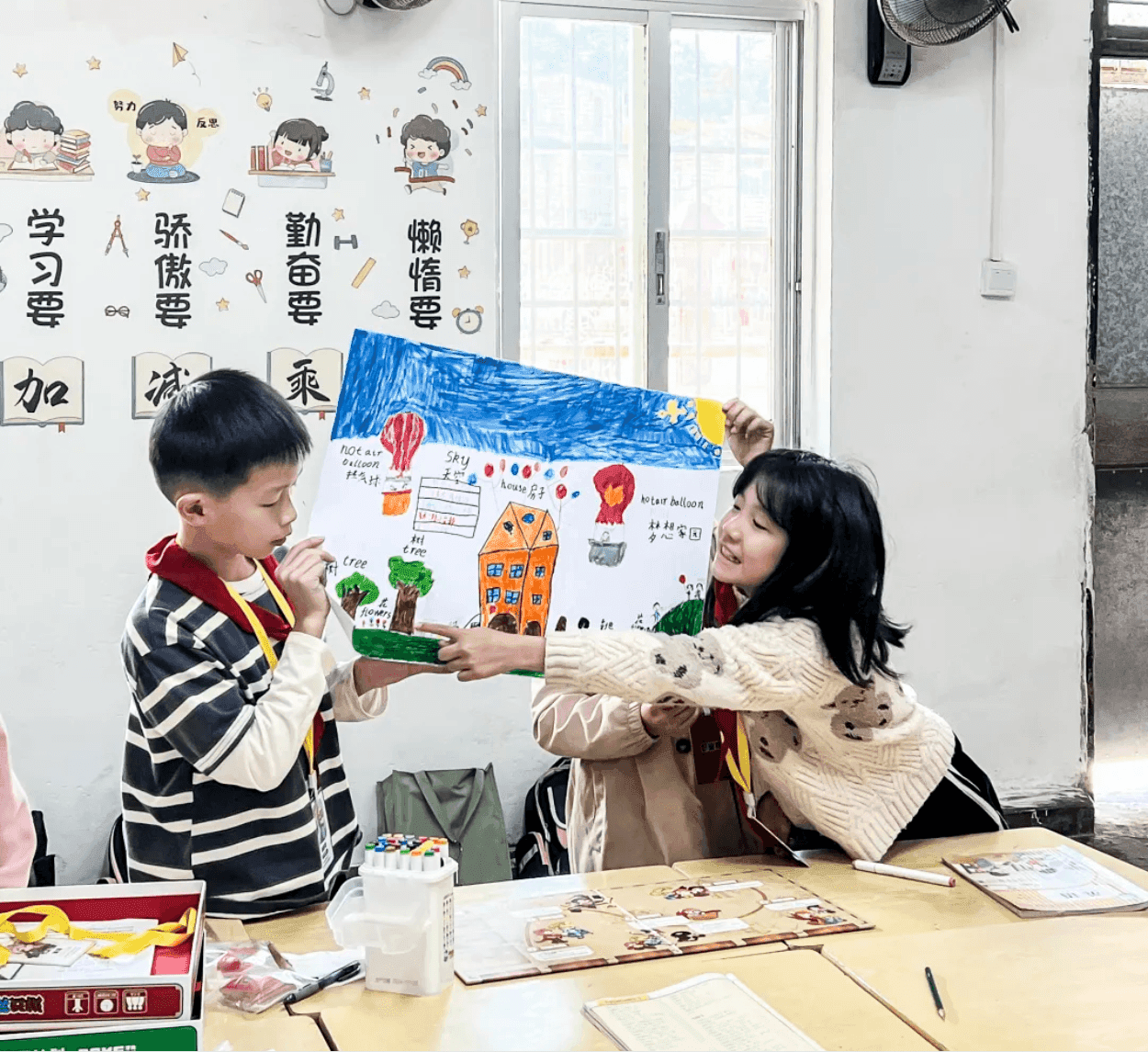
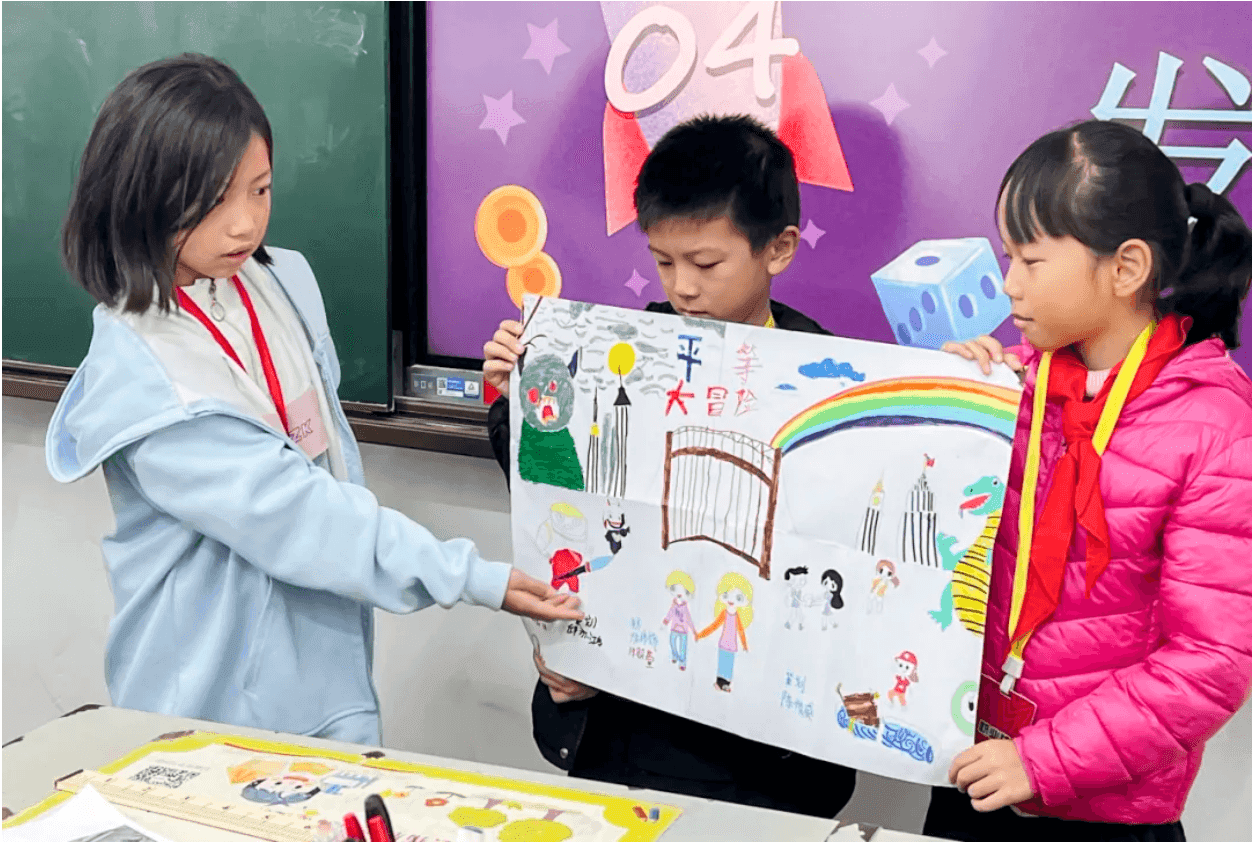
During drawing and design sessions, many children sketched carefully in pencil. The eraser stayed nearby, almost like part of the game itself.
If a line went wrong, they erased it.
If a character looked strange, they erased it.
If the design did not feel perfect, they started over.
The results looked neat, but the cost was high.
Children moved slowly.
They became cautious.
Some gave up before their ideas had time to appear.
Xiawen began each activity with a simple reminder:
“This is just a drawing. Mistakes are okay. Mistakes can be beautiful too.”
At first, it sounded like a small sentence. But slowly, it changed rooms.
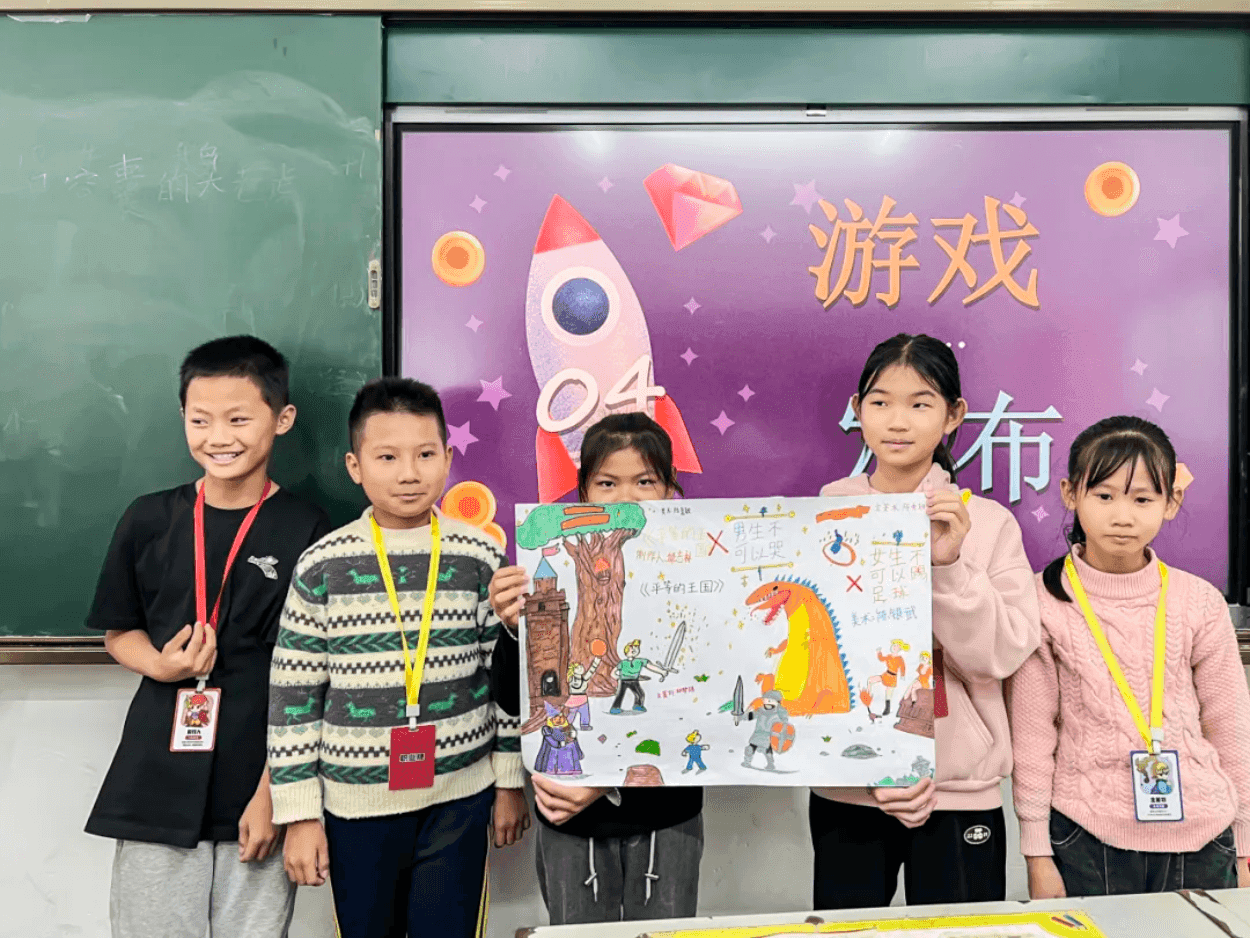
Children became braver. Some began drawing directly without pencil outlines. Others finished first, then refined. The overall quality of their work did not fall — it improved.
They were no longer spending all their energy avoiding mistakes.
They were using their energy to create.
Breaking the Math Myth
Xiawen also teaches mathematics, and this matters.
In the mountain villages of Meizhou, traditional beliefs still shape children’s ideas about themselves. Girls sometimes say:
“Math is too hard. I’m not suited for it.”
Some boys nod, as if this is simply true.
Xiawen knows it is not.
So she began using game co-creation to gently challenge this belief. She deliberately introduced themes related to SDG 5: Gender Equality. In regular lessons and game workshops, she repeated one message again and again:
“Girls can excel at math. Really, really well.”
Over time, the idea began to take root.
Once, a boy wrote in his game design:
“Girls can excel at math. This is real.”
Xiawen was deeply moved. Not in a dramatic way, but in the quiet way, a teacher feels when a small seed begins to grow. For her, education is an act of gentle persistence. It does not always change a child in one day. But it can slowly loosen the old beliefs that limit them, and open a door to a wider world.
When Learning Becomes Play
Another moment came from a fourth-grade boy whose math scores were usually low. Most of the time, he scored between 50 and 60. Then, on one midterm exam, he scored 80.
For some children, 80 might not seem extraordinary. For him, it was huge progress.
Xiawen called him to her office and asked how he did it.
He looked up and said seriously:
“Teacher, I did it myself.”
Then, after a pause, he added:
“Teacher, I played this game pretty well, didn’t I?”
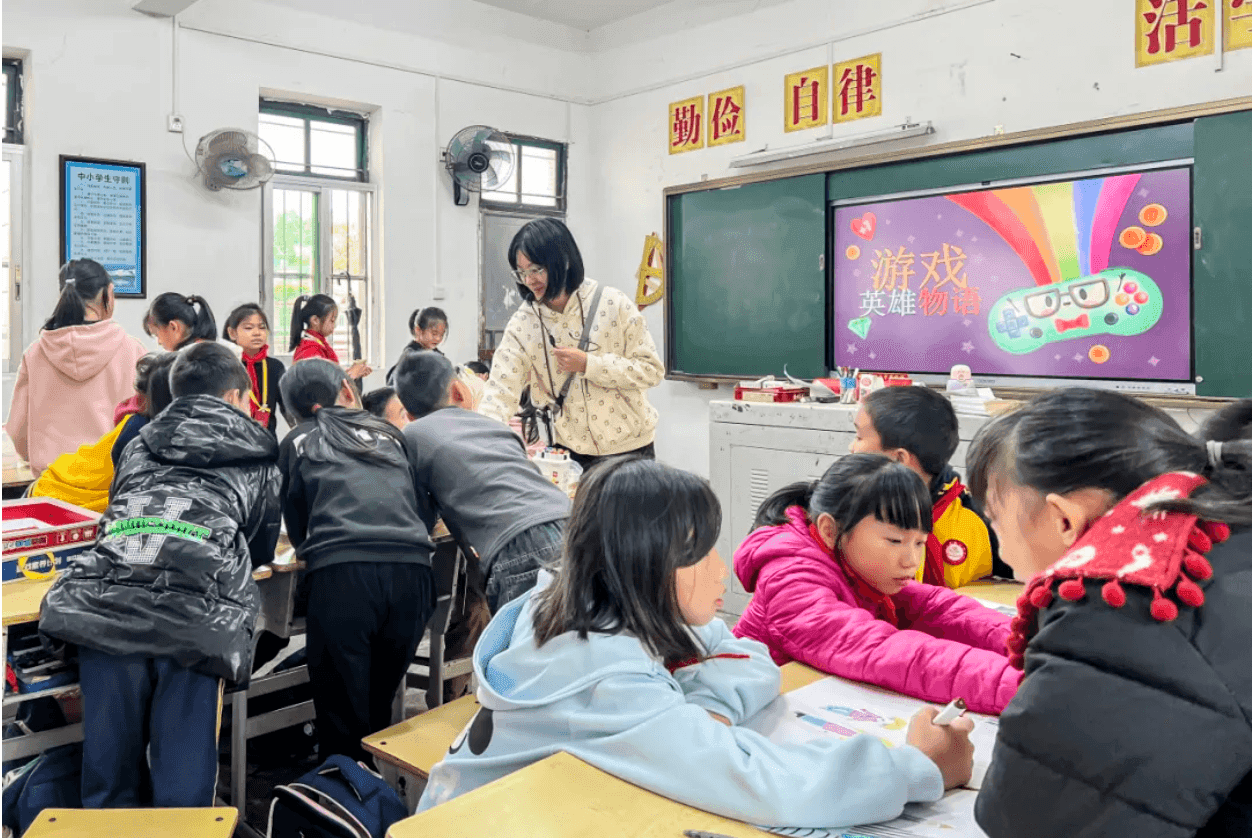
Xiawen froze. Later, she understood what he meant. The boy had treated the exam like a game. He had taken the thinking methods from game co-creation — breaking down problems, testing strategies, making choices — and applied them to learning.
The exam was no longer only pressure.
It had become a design problem to solve.
That realization touched Xiawen deeply. The workshop had not only helped him understand a subject. It had opened a new way for him to approach learning. When a child can see learning as something to play with, explore, and respond to, he is no longer only being evaluated.
He is actively designing his own way forward.
From Perfection to Possibility
Xiawen says that becoming a rural teacher and becoming a Game Master share something in common.
Neither path was as smooth as she imagined.
When she first arrived, she doubted herself often. She did not come from a teacher-training background. Lessons she prepared carefully did not always work. Children were sometimes cold toward music and art. The classroom reality was harder than the ideal she had carried.
But education surprised her.
She cleared spaces, brought in small stools, and led children to sing. Slowly, she saw the light return to their eyes. With SDG Hero, she saw another kind of light — children daring to draw, to design, to make mistakes, to speak, and to build.
Now, Xiawen is more certain that work matters.
In her classroom, SDG Hero is not only about sustainability education. It is also about helping children move from perfection to possibility.
To believe that girls can be strong in math.
To see learning as a game they can enter.
To realize that their ideas are worth trying.
In the mountain villages of Meizhou, these changes may look small.
But for a child who once feared every wrong line, putting down the eraser can be the beginning of a new world.